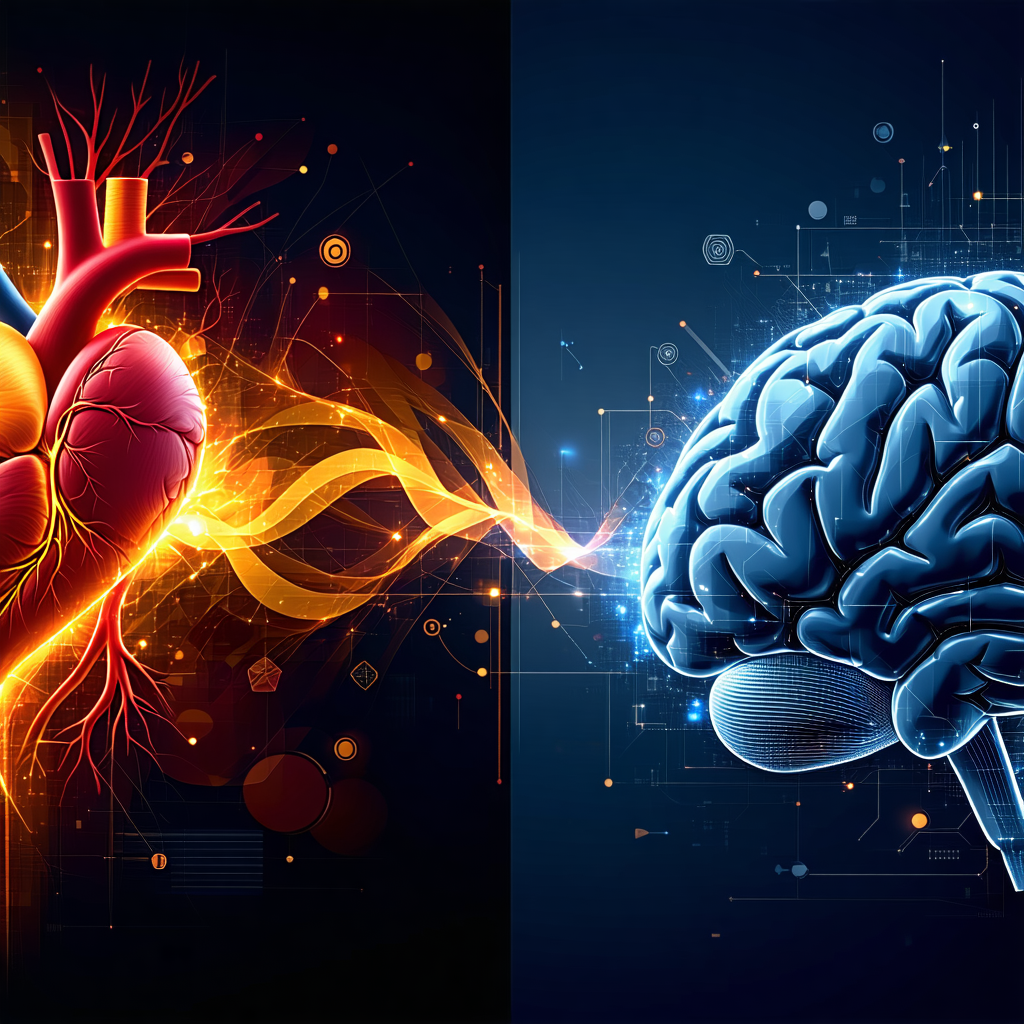
Decision-making often involves both intuition and logical thinking. Intuition allows a person to make quick, experience-based judgments, which research describes as rapid, nonconscious processing shaped by learned patterns (1,2). Logical thinking balances this by allowing a person to slow down, examine evidence, and evaluate the possible consequences of a situation. While intuition may feel like a mysterious “gut feeling,” it is actually a nonconscious judgment heavily influenced by past experiences, emotions and subconscious observations. Intuition is also different from instinct, which is a more automatic biologic response to a stimulus. The strongest decisions often come from blending emotional and rational thoughts rather than relying completely on one approach (3).
Have you ever had a nagging feeling that something was right or wrong? That feeling may not be just emotional guessing. A “gut feeling” happens when the brain rapidly processes subconscious information. It gathers clues from past experiences and environmental influences. Imagine you are about to get into an elevator late at night. As the door opens, you see one person inside. Nothing seems obviously wrong. They are just standing there. Yet, something about their posture or the overall vibe feels off. That moment is a classic example of a “gut feeling.” Still, a gut feeling is not proof of danger. Sometimes that signal is useful, but it can also be distorted by fear, anxiety, incomplete information, or bias.
Part of what people call a “gut feeling” is rooted in interoception. This is the process by which the brain senses and interprets signals from inside the body. Interoception helps the brain map the internal state of the body. It tracks sensations related to the heart, breathing, stomach, and muscles (4). During stress or uncertainty, you might notice a heavy feeling in your stomach. Your heart might beat faster, your shoulders might tense, or you may feel general anxiety. These physical sensations directly shape how you interpret a situation.
The gut and brain also communicate through what is called the gut-brain axis. This communication is bidirectional. The brain influences the gut, and the gut sends signals back to the brain (5). The Enteric Nervous System is sometimes called the body’s “second brain.” It helps regulate digestion and communicates with the central nervous system. This network uses several pathways, including the vagus nerve, immune signals, and hormones (5). This complex link explains why stress or fear creates physical stomach sensations.
This deep connection between our internal organs and our mind also plays a major role in how we perceive threats. Specifically, intuition can be connected directly to the body’s physical stress response. This response feels instinctive because it prepares the body to react quickly. When the brain detects a possible threat, areas involved in emotion and threat detection activate. This includes the amygdala, which helps fire up survival systems. This response may lead to a rapid heart rate, sharper attention, sweating, or muscle tension. These reactions are highly useful in truly dangerous situations. However, an instinctive survival reaction is not always an accurate intuition. The body can react strongly even when the actual level of danger is unclear.
Emotions are an unavoidable part of daily life. They constantly shape the way people feel, think, and act. The popular belief that people must ignore emotions to make a good decision is simply too narrow. Research suggests that emotional and bodily signals help guide choices, especially when a situation is complex or uncertain (3,6). At the same time, emotions are not perfect guides. They help people respond quickly, but they also create false alarms. For example, anxiety may make a harmless situation feel threatening. Meanwhile, excitement can make a risky decision seem far more appealing than it really is.
Logical thinking helps balance these visceral signals. While intuition provides quick, immediate alarms, logic allows a person to step back. It prompts you to examine the evidence, consider other explanations, and think through the long-term consequences. In the elevator example, intuition tells someone to pause, but logical thinking helps that person decide what concrete action to take next. This combination is much stronger than relying on intuition alone or logic alone.
Intuition, instinctive reactions, emotions, and logical thinking all play a role in decision-making, but they are not the same. Intuition allows for quick, experience-based judgments. Instinctive reactions prepare the body to respond rapidly to possible threats. Logic pushes us to carefully analyze and evaluate the true data. Knowing when to trust each approach allows for stronger choices across different situations. The most effective decisions come from blending emotional and rational thoughts, leading to results that are both meaningful and thoughtful.
References
- Dane, Erik, and Michael G. Pratt. “Exploring Intuition and Its Role in Managerial Decision Making.” Academy of Management Review, vol. 32, no. 1, 2007, pp. 33–54. https://doi.org/10.5465/amr.2007.23463682
- Hodgkinson, G.P., Langan-Fox, J. and Sadler-Smith, E. (2008), Intuition: A fundamental bridging construct in the behavioural sciences. British Journal of Psychology, 99: 1-27. https://doi.org/10.1348/000712607X216666
- Jennifer S. Lerner, Ye Li, Piercarlo Valdesolo, Karim S. Kassam. 2015. Emotion and Decision Making. Annual Review Psychology. 66:799-823. https://doi.org/10.1146/annurev-psych-010213-115043
- Quadt, L., Critchley, H.D. and Garfinkel, S.N. (2018), The neurobiology of interoception in health and disease. Ann. N.Y. Acad. Sci., 1428: 112-128. https://doi.org/10.1111/nyas.13915
- Holzer P. Gut Signals and Gut Feelings: Science at the Interface of Data and Beliefs. Front Behav Neurosci. 2022 Jul 5;16:929332. doi: 10.3389/fnbeh.2022.929332.
- Bechara, Antoine, and Antonio R. Damasio. “The Somatic Marker Hypothesis: A Neural Theory of Economic Decision.” Games and Economic Behavior, vol. 52, no. 2, 2005, pp. 336–372. doi: 10.1016/j.geb.2004.06.010